Frithjof Schuon and the appropriation of Islamic Perennialism
In the name of God, the Most Compassionate, the Most Merciful
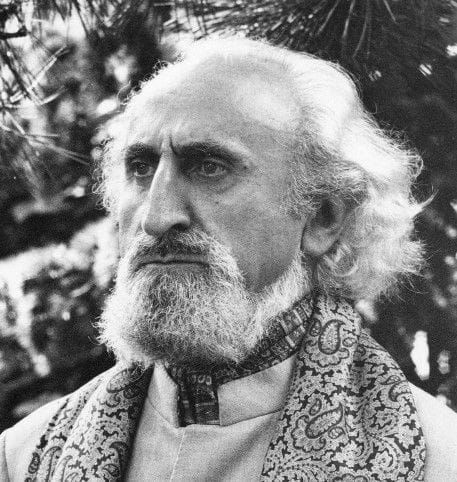
Frithjof Schuon was a Swiss philosopher and metaphysician hailing from the traditionalist perennial school. He spent a lifetime constructing a metaphysics of religion in which Islam held a privileged place, only to then systematically drain that privilege of its content. His perennialism gestures towards the primacy of the Muhammadan reality but then dissolves it into a universal esoteric substrate in which all traditions are finally equivalent, differentiated only by exoteric costume. The result is an Islam that is honoured in the vocabulary and emptied in substance.
This essay attempts a retrieval. My goal here is not a refutation of perennialism as such but a reclamation of what Schuon’s framework reaches towards and then retreats from: the genuine ontological asymmetry between religious traditions, grounded in the structure of divine self-disclosure itself rather than human judgement.
On tajalli and the ontological structure of religions
My view is not the familiar narrative that all religions started pure and gradually accumulated historical distortions. That is too flat, too horizontal a reading. The differences between the world's religious traditions are not primarily the product of human corruption layered over an originally identical deposit of truth. They are ontological from the beginning. Different traditions correspond to different orders of tajalli, different modes and intensities of divine self-disclosure. They were always what they were, serving their purpose for their specific peoples and epochs. Christianity was never proto-Islam waiting to be uncorrupted. It was a specific and limited mode of divine disclosure with its own ontological character, its own ceiling.
Islam, on this reading, is not simply the last in a chronological sequence of equal revelations. It is the most complete and encompassing tajalli, the one that integrates and surpasses all others because the Muhammadan reality (al-haqiqa al-Muhammadiyya) is ontologically first, the primordial light through which all other divine disclosures are mediated. The earlier traditions were already modes of that reality, manifesting aspects of it in preparatory and partial ways. Abrogation, then, is not simply replacement. It is completion, the bringing to full explicitness of what was always already implicit in every genuine divine disclosure.
Where Schuon appears to say something similar but doesn't
On the surface, Schuon also talks about divine self-disclosure, about religion having a sacred origin, about an underlying unity to the world's traditions. He writes that "in understanding religion, not only in a particular form or according to some verbal specification, but also in its formless essence, we understand the religions... the meaning of their plurality and diversity; this is the plane of gnosis, of the religio perennis, whereon the extrinsic antinomies of dogmas are explained and resolved." And elsewhere: "a civilization is integral and healthy to the extent that it is founded on the 'invisible' or 'underlying' religion, the religio perennis."
The language sounds familiar. But look at what he is actually doing. The religio perennis in Schuon's framework is not Islam. It is something that sits above Islam, above all particular traditions, a formless esoteric truth of which Islam is one expression among others. Schuon writes that "the esoteric finds the Absolute within the traditions, as poets find poetry within the poems." The implication is clear: the Absolute, “the real thing”, is what the esotericist accesses through and beyond the particular traditional form. The form, including Islam's specific claims, is the poem. The poetry (the universal truth) transcends it.
This is the reversal. In Schuon's architecture, Islam is subordinated to a prior universal framework. In my reading, the universal framework is Islam's own, grounded in the Muhammadan reality that is ontologically prior to everything else. The universality flows from Islam outward, not from some meta-religious truth downward into Islam as one vessel among equals.
The Aryan dimension makes the reversal visible
This structural difference is not incidental to Schuon's thought. It is encoded in how he handles the Islamic intellectual tradition itself. As Lipton documents, for Schuon, Ibn Arabi, like many Muslim mystics, succumbed to a "Semitic" propensity for a subjectivism that lacked the enlightened objectivity necessary to consistently discern the transcendent formlessness of essential truth from religious particularism, and such enlightened objectivity is, according to Schuon, inherent in the so-called "Aryan" metaphysics of Vedanta and Platonism. [Goodreads](https://www.goodreads.com/author/quotes/17571782.Gregory_A_Lipton)
Read that carefully. Ibn Arabi, the greatest metaphysician in the Islamic tradition, the figure Schuon most wants to claim for perennialism, is reproached for being too Islamic, too "Semitic," too bound to the particularity of his own revelation. The moments in Ibn Arabi where he insists on Islamic supersessionism, on the abrogation of previous laws, on the Muhammadan reality as cosmological apex, those are the moments Schuon treats as failures of metaphysical nerve, lapses into exoteric denominationalism. The Ibn Arabi Schuon wants is the one who can be extracted from his Islamic specificity and deployed as evidence for the Vedantic-Platonic truth that Schuon already held.
Schuon is described by his admirers as "a sage in the double capacity of a pure metaphysician — in the lineage of Shankara, Pythagoras, and Plato — and of an 'extra-confessional' sapiential spiritual guide... a teacher of the Uncolored Truth, of the Truth beyond form." [Academia.edu](https://www.academia.edu/10819343/The_Heart_of_the_Religio_Perennis_Frithjof_Schuon_on_Esotericism) Note whose lineage he is placed in: Shankara, Pythagoras, Plato. Not the Prophet, not the Quran, not the Islamic philosophical tradition. The truth he claims access to is already defined by those Indo-European reference points before he ever opens a Sufi text.
The direction of subordination is everything
My framework runs in the opposite direction entirely. I do not look at the world's religions and identify a universal esoteric truth behind all of them that Islam happens to also express. I look at the world's religions and see that they are already modes of the Muhammadan reality, genuine tajalliyat of divine disclosure, ordered hierarchically, culminating in the final and complete revelation that makes explicit what was always their hidden ground. The universality I affirm is not a meta-religious truth above Islam. It is Islam's own internal universality, the scope of the rahma and the haqiqa Muhammadiyya that encompasses all genuine divine disclosure from within.
On salvation and divine mercy
I also do not take an exclusivist position on salvation, and I do not think intellectual honesty requires me to. The ontological hierarchy of tajalli is a metaphysical fact about the structure of divine disclosure. Divine mercy operating across that hierarchy is a separate fact about God's nature, one that Ibn Arabi insists on with great force. God's mercy is not contingent on the accidents of historical birth. Someone who worshipped sincerely within a lower-order tajalli, responding faithfully to what of the divine was genuinely disclosed to them, was still responding to something real. The fitra, the primordial human orientation toward God established in the pre-eternal covenant of alastu bi rabbikum, means every act of sincere worship is already a recognition of God, however partial and refracted through an imperfect or abrogated form.
What I reject is Schuon's move of using this openness to dissolve Islamic particularity. My salvific generosity does not depend on treating all religious paths as equally valid. It depends on the scope of divine mercy, which is God's sovereign prerogative and not a human theological calculation. The finality and superiority of Islam stands. The scope of God's mercy also stands. These are not in competition. They operate at different registers of the same metaphysical picture, and that picture is entirely available from within the Islamic tradition itself, without importing anything from Vedanta or 19th-century European esotericism.
That is the difference. Schuon uses the language of tajalli and universal truth to subordinate Islam to a prior framework. I use the same language to show that Islam is the framework, the final, complete, and ontologically grounding form of every genuine divine disclosure that preceded it.